
/Passle/66b0e16610008cf7be5e944d/SearchServiceImages/2026-05-18-20-15-17-942-6a0b7355652d40ecb1a68f9f.jpg)
Share:
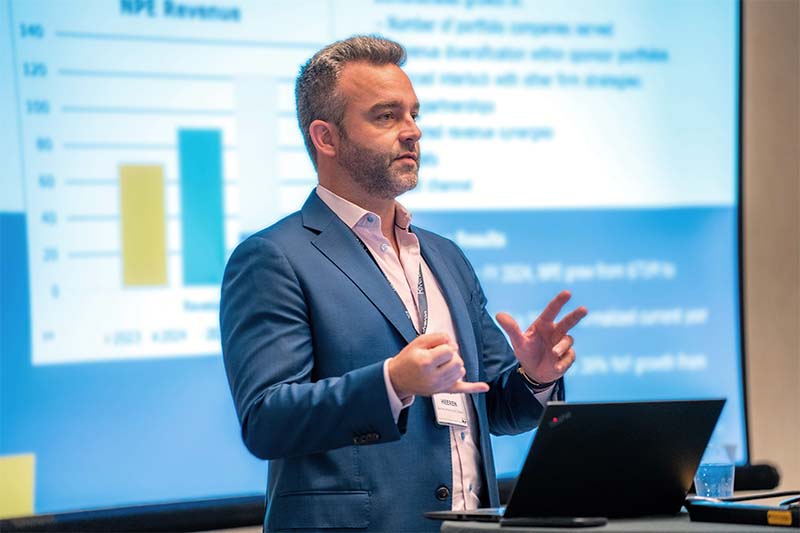
A Q&A with Steve Wolff, Senior Director, Interim Management, Riveron
We sat down recently with interim management expert, Riveron’s Steve Wolff, to discuss how a strong office of the CFO can influence outcomes for private equity-backed companies. When encountering critical inflection points and gaps in leadership, alignment, or execution, interim leadership roles are brought in to provide experienced, steady guidance. Steve shares four client success stories across the following scenarios:
- Aligning when combining: Two large companies merged, revealing differences between the office cultures, and the incumbent CFO was not aligned or prepared to address legacy issues with the speed and coordination required post-close.
- Augmenting an already-capable team: A high-growth, technology-driven company aimed to grow rapidly under new PE sponsorship, and although the outgoing CFO helped manage the transition, the already capable team needed to bring in additional capacity, specialized finance experience, and an objective perspective to help the organization scale without losing discipline.
- Managing risks and leadership gaps: A PE sponsor had deep sector expertise, but the portfolio company faced significant exposure to commodity price volatility. The CFO had been removed, lenders were considering acceleration, and the company faced a credible risk of bankruptcy.
- Refocusing roles and strengthening functions for scale: One of the company founders had been serving in both the COO and CFO role, and there was a need to transition financial leadership effectively to allow for greater operational focus during the new PE-backed growth stage. The focus shifted toward strengthening the Office of the CFO to meet the demands of scale.
In working with companies to navigate these challenges, four common themes stood out:
- Execution speed matters. Interim leadership is often brought in to quickly assess gaps and take decisive action before issues compound and limit options.
- Alignment drives outcomes. Establishing clarity and cohesion across the CEO, CFO, investors, and lenders is a central role of interim management.
- Timing influences returns. Ensuring the Office of the CFO has the appropriate experience, accountability, and bandwidth is often a prerequisite to stabilizing or scaling the business.
- Stability and discipline underpins performance. In times of transition, interim leaders help re-establish financial visibility, operational discipline, and confidence among key stakeholders.
Read on to learn more about how Steve worked with each PE-backed organization to guide success.
Q: Your first case involved a merger of equals that struggled post-close. What were the primary challenges for the office of the CFO?
A: Leadership misalignment was a key factor. At the time of the merger, the CFO had declined to relocate to the new headquarters, creating an alignment disconnect at the executive level. Subsequently, the company fell into distress and was operating under lender forbearance while attempting to execute a turnaround.
The core challenge was stepping into a fragmented finance function without clear leadership alignment, while simultaneously needing to stabilize the business and drive integration forward. The organization was effectively trying to move forward while carrying unresolved integration, cultural, and operational challenges.
This is an example of a broader issue seen in many post-merger environments — when there is a disruption in financial leadership, integration becomes reactive rather than value-driven, and the office of the CFO is unable to operate as the central driver of alignment and execution. Integration as a consequence is treated as a secondary workstream rather than a core driver of value.
Q: As Interim CFO, how did you approach stabilization in that environment?
A: The focus was on restoring discipline and alignment across three areas: financial transparency, lender engagement, and operational integration.
We prioritized rebuilding credibility with the senior lender through consistent, reliable reporting and a clearly defined turnaround plan. Internally, we addressed fragmented financial processes and worked toward a more unified operating model.
The broader lesson for the office of the CFO is that legacy issues will erode performance if they are not addressed decisively. Integration is foundational to realizing the intended value of a transaction.
Q: How did your second case differ in responsibility and what was the greatest risk?
A: In this case, the Office of the CFO was structurally sound, but the demands on it were evolving rapidly alongside growth.
The goal was to reinforce the finance function, not fix the gaps, to keep pace with the business by enhancing forecasting capabilities, strengthening KPI visibility, and introducing scalable processes that support faster, more informed decision-making.
The greatest risk was underestimating how quickly the needs of the finance function were evolving and the rate of speed needed to reinforce the function’s capabilities. In high-growth environments, there is a natural inclination to accelerate investment across sales, product expansion, and geographic reach. However, if those investments are not calibrated to the anticipated exit window, they can dilute returns and the demands of the Office of the CFO can outpace both systems and team structure.
We focused on strengthening forecasting, evaluating multiple scenarios, and aligning investment pacing with the sponsor’s exit objectives.
Q: Your third case involved a distressed, commodity-sensitive business. What were the priorities for the CFO?
A: For this case, the absence of stable financial leadership created immediate risk across liquidity, stakeholder confidence, and decision-making and represented a different mandate for the Office of the CFO — performance support to re-establish control, credibility, and basic financial visibility in a compressed timeframe. The immediate need was stabilization.
Q: How do you drive impact in this type of situation where the CFO had been removed and the function had lost credibility?
A: In the absence of stable financial leadership, the role of interim management is to quickly re-establish control, credibility, and visibility within the Office of the CFO. The initial focus is always liquidity and control. We worked to establish a clear view of cash flow, working capital dynamics, and operational exposures.
At the same time, restoring confidence with external stakeholders becomes critical. Interim leadership often needs to step in immediately to re-engage lenders, stabilize the capital structure, and create the time and flexibility required to execute a turnaround.
A critical component of the turnaround was portfolio rationalization. Underperforming business units were identified and addressed quickly. In distressed environments like this, the Office of the CFO must lead with decisiveness—delays reduce optionality and accelerate value erosion.
This is when decisive action is critical in distressed environments — underperforming assets must be addressed quickly to preserve enterprise value. Furthermore, alignment between the CEO and CFO is non-negotiable. In many turnaround situations, this alignment must be re-established through interim leadership to stabilize the business and enable effective execution.
Q: In your fourth case, how did the interim management needs evolve when supporting the Office of the CFO in a high-growth company?
A: This included adding experienced leadership and structure, formalizing processes, and enhancing financial visibility to support more complex decision-making.
The investment thesis centered on scaling the platform through continued investment. That required a finance function that could not only keep pace with growth, but also provide the discipline and insight needed to allocate capital effectively and manage risk. Unlike the earlier cases, the business was fundamentally strong and the focus was on sustaining growth while managing risk. In this context, interim leadership was less about stabilization and more about strengthening the Office of the CFO to ensure the right structure, discipline, and visibility were in place to support continued growth while proactively managing risk.
Q: How do you balance growth and risk in that context?
A: The emphasis is on disciplined expansion, and for the CFO, this often means introducing greater rigor around capital allocation, risk assessment, and operational visibility as the business scales. Strong demand and differentiated products can create pressure to scale aggressively, but not all growth contributes to long-term value.
We focused on expanding the product portfolio in a way that supported profitability and managed key risks, including supply chain dependencies, customer concentration, and capital allocation.
Interim leaders bring an external perspective and a bias toward execution. They are not constrained by historical decisions and can focus on the actions required to move the business forward.
The most effective private equity sponsors and portfolio company C-suite executives will recognize early on that an interim leader can be an ideal solution to transition their company through these challenges — which can be quite common — and use that outside perspective to establish lasting changes within the organization that are suitable for the PE-backed company’s point in its growth journey.
Steve Wolff’s experience underscores the value of experienced interim leadership across the private equity lifecycle. From stabilizing distressed situations to enabling disciplined growth and preparing for exit, the interim CFO plays a central role in translating strategy into measurable outcomes.
Editor’s note: Portions of this interview have been edited for brevity or clarity.
Explore related insights:
Sign Up for the Newsletter
Lorem ipsum dolor sit amet consectetur. At nullam dignissim et facilisis ipsum volutpat dui.
Contact us
Lorem ipsum dolor sit amet consectetur. At nullam dignissim et facilisis ipsum volutpat dui. Velit eu amet odio dignissim nunc nisl.


More Insights

The Ramp That Won’t Ramp: Outsized Demand in Aerospace, Defense, Aviation & Space and What Suppliers Should Do About It

SOC 2 and Penetration Testing: What Your Audit and Customers Expect
Riveron Atlanta Named One of Axios Atlanta’s Top Workplaces for 2026

Q3 2026 Accounting Advisory Guide: Preparing for Year-End Amid Accounting and Regulatory Change

Contact us
Continue the conversation. Reach out to Riveron’s team of professionals to explore how we can provide the clarity and insight to solve your organization’s most pressing challenges.