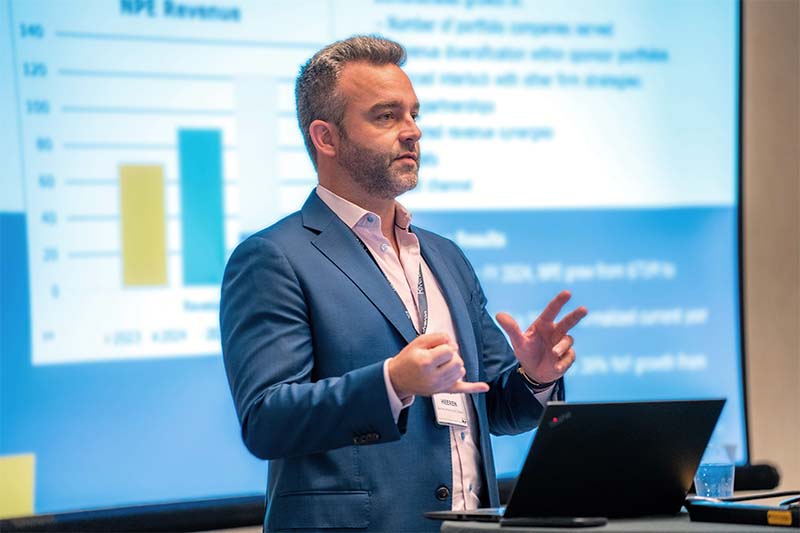
Investors, deal advisors, and legal professionals gathered in New York City on February 6th to attend the annual SPAC Conference, the largest forum for discussing special purpose acquisition companies and alternative IPO techniques. Conference attendees heard from industry leaders on topics ranging from the registration statement process to guidance on how to achieve long-term value for this increasingly popular capital markets vehicle. Riveron attended as an event sponsor, meeting with participants to learn more about the challenges they are facing in the SPAC market and to discuss important trends and developments. Additionally, Riveron Managing Director Zac McGinnis served as a conference panelist in a session on mitigating pre- and post-IPO risk in a SPAC transaction.
During the conference, several themes emerged. Here are our key takeaways from the 2020 SPAC Conference.
SPACs are on the rise
SPACs constituted nearly one out of every three IPOs in 2019, generating the highest amount of total IPO volume for the year. This volume was a sharp increase from 2018, when SPACs were the third most active sector and represented nearly one in every five IPOs. The reasons for this increase vary among industries and investor types and can be affected by the degree to which a target company is levered or the sophistication of the management teams involved. Sponsors cited several factors that influenced their decision to choose this capital markets vehicle:
- Sponsor expertise: A SPAC sponsor is typically an experienced industry expert who has managed similar target companies and can provide guidance for the target as a new public company. In a traditional IPO, this same level of expert leadership may not be available to the target company management team.
- Capital discipline: A SPAC business combination can provide a deleveraging event that otherwise would not be available in a traditional IPO or direct public offering (DPO).
- Economic advantage: A SPAC unit offers a unique, low-risk investment opportunity, and a more attractive yield for initially vested capital than US Treasuries. A unit is the combination of public shares and a warrant, which is generally the equivalent of a fraction of a share.
SPAC trends generally follow the direction of capital markets overall. For example, SPACs are increasing in the technology, media, and telecommunications industries while cannabis SPACs are also rising as a result of loosened US regulations. Conversely, energy-focused deals have recently fallen out of favor. It remains unclear whether foreign SPACs will gain traction and take advantage of certain faster-to-market SEC financial reporting accommodations, such as more favorable financial statement staleness rules.
Value is not always measurable
Given the condensed SPAC timeframe (typically 18-24 months), sponsors and other key stakeholders often overlook the fundamental deal value drivers for traditional financial metrics. While non-GAAP financial metrics such as Adjusted EBITDA or Free Cash Flow underlying the economics of a transaction often generate a strong and familiar tailwind, value components are commonly missed due to a SPAC’s forced speed to market. For example, a highly technical operational base in the technology, healthcare, or oil and gas industries may not be measured and reported at fair value in a target company’s balance sheet or highlighted in their historical or future Adjusted EBITDA trends. Without this expert operational base, however, the fundamental deal economics are at risk of failure. A greater understanding of the key deal attributes and value drivers can go far to ensure the transaction’s success, generating a stronger long-term EBITDA lift than current fundamentals.
Having the right team is crucial
Despite their recent popularity, SPAC mergers remain complex vehicles as many people are unfamiliar with the process required to navigate them. SPAC sponsors and target company management must select the right team in order to execute the deal within their tight timeframe. This selection requires striking the right balance between legal, industry, accounting, SEC reporting, investment banking, operational, and investor relations experts. A SPAC business combination is likely to fail if the working teams are unprepared or do not communicate effectively during the IPO and business combination processes. Having a serial SPAC sponsor mentor for less experienced SPAC sponsors can be a valuable investment. Unforced errors on timely or extensive diligence from the target company or SPAC sponsor can also erode a deal.