

We are still waiting on the US Securities and Exchange Commission (SEC) to officially require ESG disclosures in the 10-K. However, regulators in the EU, Australia, and other countries around the world are already asking for more robust information. To meet these requests—and respond to the SEC rules the minute they are finalized—companies need to have audit-ready ESG data sooner rather than later.
This means treating ESG information with the same level of rigor as financial data. Most companies would not imagine solely depending on spreadsheets to manage and report their financials. With ESG disclosures now garnering the same level of scrutiny, Excel, which may have served ESG data needs well in the past, can no longer be the exclusive long-term approach.
Today’s ESG tools are rising to the new reporting challenges
Over the past couple of years, an influx of ESG tools has popped up in the ESG software market, and the landscape is rapidly evolving. Two years ago, the first generation of sustainability software came with high price tags and limited capabilities; most solutions didn’t cover the vast needs of companies of all sizes across various industries. Companies faced with improving disclosures for numerous ratings agencies, aligning with multiple frameworks, answering investors’ questions, and responding to customer requests didn’t exactly find the quick fix they wanted from these tools. Instead, they have been left frustrated with previous versions of sustainability software that left many of these boxes unchecked.
ESG software vendors have heeded the feedback. Solutions providers have infused capital, time, and customer input into their products, and several solutions have undergone significant updates. The next generation of sustainability software has much more to offer companies across all facets of ESG reporting and stakeholder communications. From tagging disclosures to aligning with frameworks, submitting questionnaire responses, and calculating data, today’s ESG reporting software is much more closely aligned with the work corporate sustainability teams do. In some instances, the prices have become more palatable, making adopting the tools easier to justify.
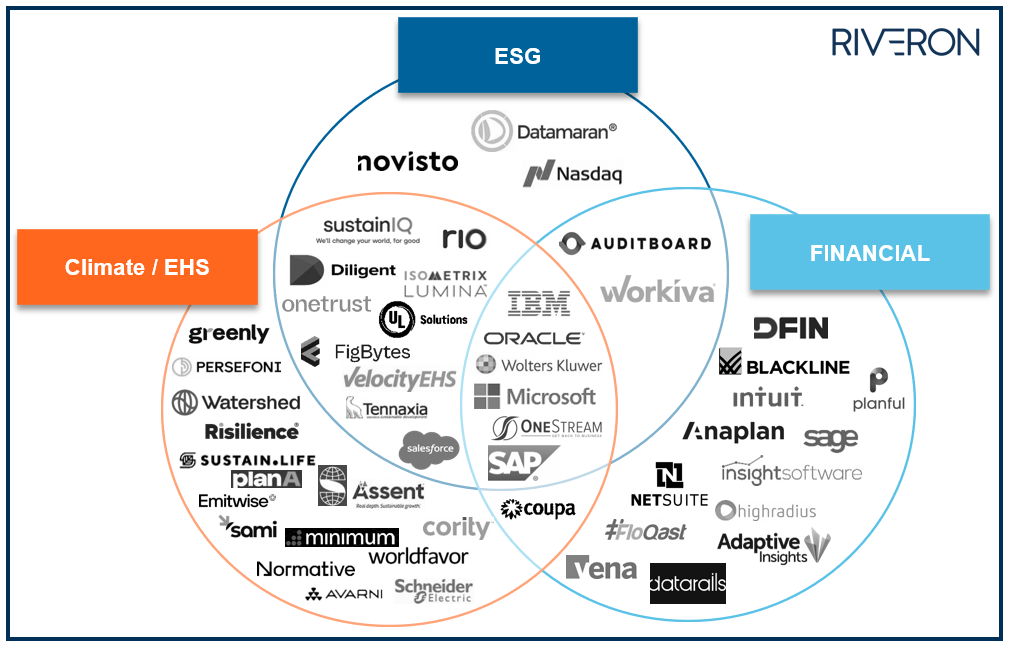
Reporting Solution Landscape
Software and toolset for ESG, finance, and accounting are crowded and complex. We guide clients through the selection process, starting with the solutions in place and identifying where ESG lives across the enterprise to manage data collection, monitoring, and reporting processes.
Start the hunt for the right ESG reporting software now
While the market now offers a range of viable solutions, the idea of plugging into a quick fix for ESG reporting is still somewhat impractical. The reality is that it takes time to demo multiple platforms, assess the pros and cons of each, select a platform, complete implementation, and be ready to externally report data from the solution. Simply moving down the path from introduction to proposal requires a handful of calls and discussions, and implementation can take two to six months depending on the solution and the amount of historical data to import.
For companies looking to have ESG reporting software in place starting in 2024, the search for the best-fit solution starts now.
6 steps to identifying the best-fit ESG reporting software
Each company’s ESG reporting needs are unique. The right software solution depends on variables including the company’s current state of reporting readiness as well as its future goals.
Here’s a roadmap that can help organizations move through the necessary steps and save time and resources by investing in a solution that is a good match for the business.
1. Create a metrics list
Many companies are already collecting ESG metrics and will want to select an ESG reporting software platform that can accommodate these data. Start by compiling a list of current metrics as well as the additional metrics the company may report in the future. Have an idea of where this data will come from within the company and who may be charged with overseeing the metrics. Keep this list handy during the demo phase.
2. Take inventory
What systems and solutions does the company currently use for ESG data collection and reporting? For example, some companies use Excel for greenhouse gas emissions data combined with a range of other solutions specific to HR, SEC reporting, board reporting, financial reporting, and/or governance, risk, and compliance data.
Some of these solutions may offer sustainability software or add-ons worth considering. Further, some ESG solutions may connect to other software systems already in place at the company. Knowing the current technology landscape and exploring compatible solutions can streamline the software selection and implementation process, saving valuable time and resources down the road.
3. Identify the ESG reporting oversight team
The chief financial officer, the chief sustainability officer, or the general counsel are the most common owners of published ESG data. These individuals and their departments will likely have preferences and opinions related to an ESG software solution’s required features. It’s important to know who will ultimately be responsible for ESG data reporting and to gather input that can help guide and influence the software selection decision.
4. Decide on must-have features
Once key players have been consulted and all input has been gathered, make a list of requirements, and divide them into need-to-have features and nice-to-have features. For example, are GHG calculations a must for a new software platform, or does the company already have a solid solution in place? What about sustainability report drafting capabilities? Make sure to solicit input from the chief technology officer or head of IT when preparing and finalizing the features list.
5. Assess several solutions
Now it’s time for the fun part—seeing everything potential sustainability software solutions can do. Uncover as much as possible about each potential platform during this time but be sure to stay focused on the company’s most important requirements and not get sidetracked by fancy bells and whistles that are exciting, but extraneous. Leverage information gathered in the previous steps and consider developing a scorecard prioritizing must-have capabilities.
During the demos, make it a priority to ask about the flow of data: what other solutions can connect to the platform to automate various data collection and reporting processes? For example, is it easy to upload utility bills or how manual is this process? Does the platform allow companies to more easily respond to questionnaires like CDP or S&P’s CSA? This is the time to dive in and understand how and where a platform can save time and resources during the ESG reporting process.