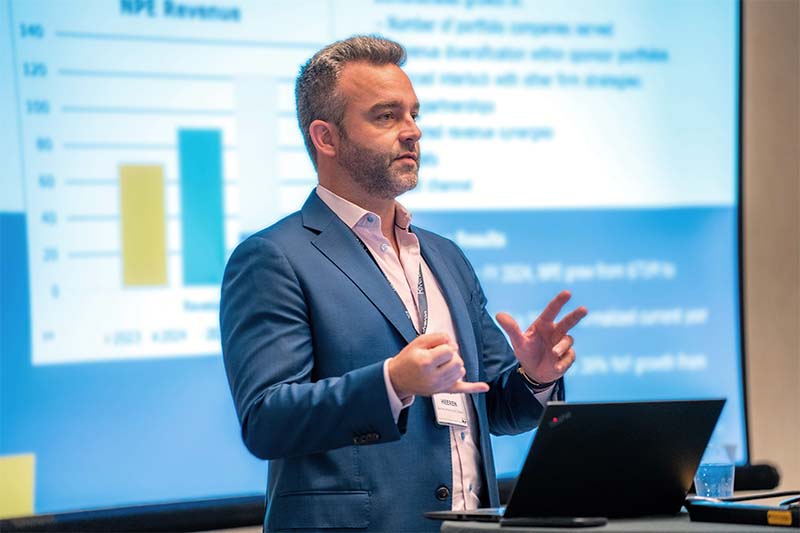
Welcome to Riveron's twenty twenty six mid year accounting update webinar. First half of twenty twenty six was again marked by uncertainty from geopolitical risk and impacts of AI, also balancing a significant increase in activity in capital markets, m and a, including even in the accounting profession. In preparation of the second half of twenty twenty six, today, we'll cover updates to the FASB agenda, proposed rulemaking by the SEC, a closer look at capital markets activity and what to expect if you're anticipating participating in in a capital markets transaction, the impact of AI and related governance impacts, and a practical look at how you should be thinking about controls remediation at this point of the year. So pretty packed agenda. And with that, now some quick admin reminders. There will be four polling questions throughout the webinar. And in order to receive CPE credit, you'll need to respond to each question. If you have questions throughout the webinar, feel free to submit them in the Zoom q and a chat feature, and we'll review and respond to them throughout the webinar. Webinar evaluation form and CPE certificate will be emailed to you after the webinar. You'll also receive a follow-up email with the deck from today's presentation and presenter contact info. And with that, let's introduce today's presenters. Hand it off to Val to get us started. Thanks, Patrick. I am Val Flanagan. I'm a director in our accounting advisory practice, and I sit in the DC office. I specialize in complex, transactions such as debt and equity, a lot of financial reporting, IPO readiness, and those types of things. Joel, over to you. Yep. My name is Joel Gromberg, and I'm a director in the accounting advisory practice. I sit in our Atlanta office, and I work closely with SEC reporting and complex transactions. And I'm Kayla Mayfield. I'm an associate director in our accounting advisory practice out of Denver. I specialize in IPO readiness, all sorts of m and a transactions, and, the renewable energy industry. Over to you, Ashish. I'm Ashish. I'm a director in risk advisory at Riveron and have been with the firm for over five years based in Connecticut. Before joining Riveron, I was with Deloitte and PwC. And I'm Patrick Garrett, a managing director in Riveron's Dallas office. He's specializing in a broad array of technical accounting topics and working in Riveron's national office. With that, let's get into the content, and I'll hand off to Val to cover updates from the FASB. Thanks, Patrick. So the FASB had a bit of a slow start going into the year. No real activity in q one. But in q two, they released two new accounting standards. The first is around environmental credits and environmental credit obligations. It's the first time that we've really had an accounting model that what is relevant to this area. In the past, companies have used different accounting models by analogy, and so we're pretty excited to see this coming out. First of all, it gives you what the definition is of an environmental credit. And if you have an item that meets the definition of environmental credit and it's probable that it's gonna be used to settle an environmental credit obligation, then it has to be established as an asset on the balance sheet. And there's no real bright line for probability here, but it's around seventy five percent likely that it's used to settle that obligation. And so once you meet both of these, thresholds, then you're establishing an asset, and there's two types. So there's gonna be a compliance environmental credit, and that's the type of credit that you have that you're expecting to use to settle a specific obligation. And those are gonna be measured at cost, and they're not gonna be tested for impairment. And then all of your other credits that meet threshold for being established as an asset are gonna be recognized at cost as well, but then they're tested for impairment each reporting period. And then any other credit type activity that you have that don't meet the threshold for being established as an asset, any of the related activity is gonna be expensed during the period and at the time the costs are incurred. And then on the liability side, environmental credit obligations that are are gonna be measured using a linked model. So you're gonna have a funded portion and an unfunded portion. And the funded portion is the portion that you have environmental credits set aside for that are specifically gonna be used to settle that portion of it. And then your unfunded portion is everything else. And each reporting period, you're gonna have to go through the process of identifying which portion is funded and which portion is unfunded. And along with these guidelines, the new guidance also provides disclosure requirements such as what obligations and credits you hold, any changes in the intended use of the credits that you have, and then any significant judgment or estimates that you're using in developing the values that you're assigning and prescribing and putting on your balance sheet. And the standard's effective in twenty twenty eight for calendar public companies and twenty twenty nine for nonpublic companies. So a little bit of time there to think about that. The next one here is around pick dividends on preferred stock, and this applies to preferred stocks that are in permanent equity and in mezzanine equity on your balance sheet and both convertible and nonconvertible preferred stock. And the standard here establishes a single measurement model, whereas in the past, there's been a little bit of latitude where you can develop your own fair value approach for establishing the dividends on the balance sheet. But under the new standard, it provides that the dividends are initially measured based on the stated rate in your agreement. So it's gonna align how these are being accounted for on your balance sheet. It's also gonna align EPS in some cases as well because some of these calculations may change. It could impact income available to common shareholders. And, ultimately, you're gonna have more comparability across both of these areas once the standard's adopted, which is twenty twenty seven for calendar year filers and then twenty twenty eight for nonpublic filers. So now that we've talked about what's been issued by the FASB, wanna also address some of the feedback that they've gotten from the standards that have been recently adopted by public filers. The big one here is segment reporting, and this required presentation of significant segment expenses and a reconciliation to segment revenues for both the current period and any prior periods that are being presented. And the feedback that the FASB got from management teams is not only is there a lot of judgment in deciding what is a significant expense, but once you've identified that, looking at your prior period data and saying, okay. I didn't have this at the level of detail that would have been required to bucket it into these significant expense categories. And the work there, if you have multiple ERPs, if things aren't tagged consistently was, you know, it's a pretty big lift for teams, and it was significant effort to get that presented both of the annual period and for quarterly periods. So a lot of feedback there around the amount of work that took. And then, you know, similar thing theme for income taxes. So the income step tax standard required an additional level of detail for income taxes paid by jurisdiction. So if you're in a multinational company, you have your local jurisdictions, and they're making the tax payments to their local authorities. And there's never really been a reason to have to consolidate that and present it, you know, at the, top of the company or in a consolidated way. And so going through and seeing and trying to aggregate that data was it required a lot of work from management teams. And not only that, thinking about the disaggregation of, you know, how tax payments, tax rules work in multinational situations, presenting the disaggregated tax rate reconciliation also caused a lot of heartache for these teams. So we have the eight categories that the effective tax rate needs to be broken into on a consolidated basis. And looking at cross functional companies and multiple countries, cities, municipalities, etcetera, there was a lot of challenge in making sure that things were consistently presented across the organization. A lot of companies are using spreadsheets to develop their provision. And even if you had tax provision software, it wasn't at the level of detail required. So that also caused a lot of, you know, pain for teams and a lot of cross functional organization to get you into a good spot for meeting those requirements. Stuff tails nicely into what's upcoming for companies. I know everyone's very excited about the dice standard. It's effective in twenty twenty seven, so we still have another reporting period. But this is gonna require in your footnotes presenting your expenses from your income statement in a footnote to the financials based on natural expense categories. And this is an area where we're expecting, you know, from early adopters, folks that they've heard feedback from that this is also gonna be a significant effort to implement, you know, multiple ERPs. It's a similar discussion of the segment expenses. Are we tagging everything consistently across our ERPs, across the countries that we're in, etcetera? So, you know, our thought here is get started as early as possible. Think about doing an anal like, an analysis of your data, seeing where you have inconsistencies, how you can align your tracking and tagging of your expenses. Also, get your auditors involved. Make sure they're lockstep with you as you're going through the process, talking through the assumptions that you're making, the approach that you're taking. It's gonna make it a lot easier once that, you know, adoption's required next year. Looking ahead now to what's on the FASB agenda, what moves have they been making so far this year, there are a couple of topics here that I'm gonna cover, and the first is around stablecoin classification. So this became a technical agenda topic at the end of twenty twenty five. And during q two, the board completed their internal deliberations on this in April. And one of the items that they decided on is that they're going to provide examples and the cash flow guidance of digital assets that might meet the definition of a cash equivalent. Because the big question here is, do stablecoins meet the definition of a cash equivalent? How are we counting for those? How are we presenting them? And so now they're looking at providing specific examples that teams can use to say, okay. I need to establish this as a cash equivalent and how it's gonna be presented in their financials. We're expecting an exposure draft on this in q three of this year, so it's something to look out for, related to stablecoins. And the next one here is accounting for transfers of crypto assets. So crypto is something that there's been, you know, mixed reviews on, but it is becoming more commonplace that companies have crypto assets that they're invested in. The so the FASB is looking for being able to provide more guidance to make this the accounting for crypto more consistent across reporting entities. And as of April, the board decided to expand the scope of ASC three fifty sixty to include wrapped tokens in the guidance as well. And they noted that wrapped tokens are gonna have to be disclosed separately on your financials if they're significant to you all as a company. More information to become on that during the process, so, you know, keep keep your ears out. And then the last piece here that I'll talk about is something that's added to their research agenda. And I know that Kayla is pumped up to talk about AI later on in this webinar. It's something that we hear about every day at Riveron. I'm sure, you know, all of our clients are talking about it, everyone in the finance world. But the FASB is looking at you know, there's more and more investment from companies internally and externally. There's a lot of internally developed AI. And so the FASB is looking at the intangible asset guidance, which requires you to expense any internally developed, intangible assets. And they're wondering, you know, is this appropriate based on the level of investment that companies are making internally? So more to come on this, but we expect them to be looking at that in a lot of detail based on, you know, where the world's going as it relates to AI. And the overall theme here from what's been adopted, what's upcoming, what they're thinking about is transparency and disclosures, providing more disaggregated disclosures, investors providing providing more clarity to your investors. And, you know, the things that are upcoming on the agenda are really meant to say, okay. We have all this guidance, but the world's changing. We're introducing new types of investments and assets into the world. Is the guidance appropriate for that? So interested to see what's gonna happen with these few areas. So we'll keep on a lookout for that. And with that, I will hand it over to Patrick for the first polling question. Thanks, Val. Certainly a lot to cover there and a lot on the agenda and upcoming. So with that, jumping into the first polling question. Which upcoming accounting standard will require the greatest effort from your organization? A, DICE b, income income tax disclosure enhancements c, environmental credits and obligations d, preferred stock, pick dividend accounting e, not sure yet or other, feel free to drop it in the chat. While we wait for polling question responses here, Ashish, we just talked about a few new standards that have significant disclosure impacts and could require process changes. From a governance and controls perspective, do you have any thoughts that, you know, would share with the audience around what a company should think about in adopting a new accounting standard? Great question, Patrick. When adopting a new accounting standard, companies should think beyond technical compliance and focus on overall readiness. First, assess the impact early, especially on recognition, measurement, and disclosures. Second, evaluate whether existing processes and systems can capture the required data or if any changes are needed. Thirdly, involve cross functional teams, including IT and FP and A to ensure alignment. And finally, document judgments and communicate clearly with stakeholders. The most successful adoptions are proactive and treat this as both a technical and operational change. Thanks, Ashish. Ashish, that's great insight, especially, I think we've all seen where those implementations, new standards sneak up on us, and we, becomes more of a fire drill at the end of the year. So very helpful. And it looks like from got the polling request, pulling results in and a lot of focus on Dice, which I I think is definitely warranted. With that, move on to, you know, hand off to Joel here to walk us through some of the new SEC proposed rulemaking and updates from the SEC. Alright. Thanks, Patrick. Yeah. As Patrick said, there was a lot of activity going on with the SEC in the first half of twenty twenty six. So in this section, we're gonna talk about four main things. The first being the modernization of the SEC reporting framework. The second is the potential shift to semiannual reporting. The third is the SEC's updated position on climate disclosures. And then we're gonna round out this section with some, common letter trends and areas to watch out for going into the end of twenty twenty six and into the future. So the first item on the agenda is modernization of the reporting framework. So the current proposal has two points. The first point being that the SEC would change the threshold for being a large accelerated filer from seven hundred million to two billion of public flow. This is a significant change in the amount as the original rule was, issued in two thousand two, has not been adjusted since. And so what that means is that a significant portion of currently large accelerated filers may not be, required to have the same reporting requirements going forward, specifically under SOX four zero four b. The second portion of the proposal is to basically get rid of the Excel filer category and have basically two buckets, SEC filers and then large accelerated filers. The proponents of this proposal advocate that this will reduce compliance costs, but there will be some questions on from investors and stakeholders as to what controls and governments questions would be needed to give information to the markets based on these changes. And so as I say said earlier, this is just a proposal. So the timing is uncertain of when this would come about, but I think it would be useful for organizations to begin planning and talking internally about how that could affect their organization should this become the rule. The second proposal that we'll discuss is the optional election that companies could make to go from quarterly reporting to semiannual reporting. If we can go to the next slide, please. This has been put out there mainly to provide companies some relief from the talent, time, and cost of doing quarterly reporting, and also to help companies maybe reduce the man the expectation of managing their companies quarterly to core core core. Excuse me. However, according to one survey, about ninety four percent have responded that they would not make this election as it currently stands. And so it it would be a good exercise for companies to start thinking about as well what we what you would do if this change did occur. Again, the vast majority of respondents to this have currently said they would not adopt it, but it is still just proposal but worth conversing with people within and outside the organization of what that would mean for you and including in comparison to your competitors. The next section that we'll discuss is the SEC stance on climate disclosure requirements. So in twenty twenty four, the SEC issued rules that would require large filers to, have greenhouse and emissions disclosures within their public filings. Once those were issued, however, there was a lot of, litigation and challenge to these rules. And since that point, the the SEC has proposed to rescind those exact rules. And so the endgame is that, the climate disclosures at the federal level would be become less prescriptive and not required. However, there is a nuance to this. If you're a large multinational working in the EU or having a presence in the EU, you would still be subject to the, CSRD, the corporate sustainability reporting directive, and would still need to maintain the ESG framework to, respond to that. In addition, there are state and local laws in place as well that require these disclosure as well. So at the end of the day, there are still regulatory requirements for a good substantial portion of companies that need to be filed. In addition, there is substantial market need for this information as well. According to the global sustainability survey, there's about thirty trillion assets under management that are incorporated into ESG integration into their operations and strategy. And so you have this pressure between the various regulatory bodies in the market that is still driving some of the need and desire for this, information. And then next is the common letter trends that we have noticed within the last, half year. The first and parental number one is clarity and specificity within the MD and A. What the staff has clearly stated is that within your management discussion analysis, you need to make sure that you have quantifiable drivers and offsets within your descriptions. Boilerplate language is not going to be sufficient and will result in a comment. So, for example, if revenue increased twelve percent year over year, the SEC staff is going to say that you should tell why that increased by either sales volume, pricing power, product mix, geography, or foreign exchange, and so that you can see or explain in your filing why you had an increase in sales activity. And then the second topic that has come up and has been consistently in the top two, for the last couple of years is the presentation and disclosure of non GAAP financial metrics and KPIs. The key here is to ensure that your non GAAP metrics reconcile to the correct line item within the GAAP financials and not just the most relate most closely related one, but also that you're not disclosing the non GAAP more prevalently than the GAAP. The the rule requires that GAAP be equal or more prominent than your non GAAP. So it's just something to keep in mind as, companies are issuing eight k's, ten k's, investor relations that are gonna go out into the public consumption. The third one and in line with what Val talked about is segment reporting. Post issuance of ASU twenty three zero seven, the staff has been asking questions and, asking for explanation related to the CODM. What are they reviewing? What is the nature of the expenses, and the disclosures that they would have that companies have been issuing into the public space and making sure that those are aligned with the explanation or the intention of the rule. The next one is revenue recognition and making sure that disclosures within eight k's, ten k's, and and other financial information tell the same story upon for revenue recognition, the satisfaction of performance obligation. Each filing should be consistent across this, each other in terms of how the company describes revenue recognition and that process. And then finally, what we've noticed is that the SEC staff has been asking com or sending common letters about goodwill and significant estimates. This is along the lines of disclosing headroom related to goodwill and the sensitivity, but also if there is a critical accounting estimate that you're very clear about the assumptions and how those changes or changes in assumptions can impact the financial results. So they've been wanting to make sure that everybody is being fully, clear on how those could impact the financials, that you are issuing. On the next slide, we've got a few emerging areas to watch. Artificial intelligence is number one, as the world is constantly filled with news and headlines, about artificial intelligence and its impact, the SEC is flagging questions around the statements that companies are making, making sure there's governance and control testing around programs and processes within companies that are using AI to, assist in closing financial reporting. And so Kayla will cover this in much greater detail in the next section. The other areas that are some continue to be emerging areas of cybersecurity risk, especially since the issuance of the cybersecurity rules in twenty twenty three. The SEC is really honing in on making sure that management and audit committees and boards have the required expertise to manage and govern the risks associated with our continued development of cybersecurity and web based tools. And it's Valve matching crypto and stablecoins as a continue, growing and evolving process. And so when those new those new rules will come into effect, there'll be continued emphasis on making sure that the disclosures are clear within the documents filed. And then the last couple of areas is macro and macroeconomics and the policy changes. Tariffs and trades have been a huge, disclosure and conversation topic in q one and q two of twenty twenty six, and the staff has just said that companies should make an effort to be very clear on the specific risk related to the supply chain margins, cost of sales that may be impacted by the tariff exposure that any company may have. So be very specific when you start talking about those in your filings and make sure that it's supportable. And then the last is tag tax policy changes. Again, clear being clear and specific about those changes and the impact is rule number one on what the staff is asking for. So now I'll turn it over to Patrick for the next poll polling question. Great. Thanks, Joel. And with that, let's look at polling question number two. If semiannual SEC reporting became an option, how would your organization likely respond? A, adopt as soon as practical B, evaluate benefits and drawbacks. C, continue quarterly reporting. D, too early to determine. Or e, not applicable. Definitely a a hot topic of conversation there. And while we wait for responses to come in, wanted to ask Val, like, if we've talked a lot about rulemaking from the FASB, from the SEC. And in your work with your clients, what do you think? Is there anything from a rulemaking perspective that you think would be particularly impactful for companies who might be thinking about an IPO? It's a good question, Patrick. I think, you know, I mentioned dice, and I think that is probably the biggest area that they need to keep on their radar. I know a lot companies, they're asking what do we need to do for PCAOB uplift as we're getting ready to be a public company. And even looking at our polling results from question one, Dice is the biggest thing on everyone's mind. And they're already thinking about segment disclosures and EPS and those things, but, you know, it's really important they don't lose sight of the new upcoming standards that are only relevant for public companies. So just wanna keep that on their radar as they're thinking about, you know, what additional work we need to do to be ready for our s one filing. Yeah. It's a good call, especially because it's a new standard coming in. And getting the results back and a kind of a a mix of of responses here. And, definitely, everyone's kinda keeping an eye on how the semiannual reporting turns out. And so with that, I'm gonna hand off to Kayla to talk through hot topics, trending topics, all the things AI, IPOs, etcetera. So, Kayla, take it away. We love AI. We love talking about AI. But first, we're gonna start with the broader capital markets backdrop that we've seen because I think it provides important context for everything that we're discussing with clients in terms of transaction and growth strategy discussions that they're having these days. So we've all seen the volatility in the past few years that was driven by inflation, rising interest rates, macroeconomic uncertainty. But now we're we actually are starting to see a meaningful reopening of the capital markets. The data on this slide obviously highlights that shift. In twenty twenty five, companies collectively raised nearly seventy one billion dollars, demonstrating, you know, investors are, again, willing to support new issuances, especially if the fundamentals are compelling. And that momentum has carried into twenty twenty six. Q one twenty twenty six alone generated nine point four billion in IPO pro proceeds across twenty two traditional IPOs, which is the first, core the strongest first quarter that we have seen in five years. And so what's interesting here is where the activity is concentrated. Tech, digital infrastructure, those companies are really leading the market, which is driven largely by continued investment in AI, cloud infrastructure, data centers, cybersecurity, software platforms, especially AI enabled software platforms. And so we're seeing investors rewarding businesses that can demonstrate, you know, scalable growth, recurring revenue, a clear path to profitability. Those are all extremely important, but it is working. And then the chart on the right reinforces this trend. Both the number of deals and total capital raised have steadily been increasing over the last several quarters. So it's not just that we're seeing, you know, isolated transactions, but, a broader return in general of confidence among both issuers and investors. At the same time, still an enormous amount of value sitting in private markets. Nearly four point three trillion of unicorn value remains private, so a bunch of high profile companies are kind of still evaluating the timing of potential liquidity events and the strategy that they take. But as market conditions continue to improve, we expect this pipeline to remain active. And, you know, key takeaway here, the window's open again. Access to capital is improving. Investor set investor sentiment is strengthening. Companies have more strategic options available to them than they've had in several years. So building on that theme, we're seeing renewed momentum across both public and private markets. So if we go to the next slide, on the IPO side, some of the most closely watched companies in the market today are concentrated in AI and tech. I mean, everyone saw SpaceX's insane valuation and IPO last week. I'm sure a lot of people made a lot of money off of that, but we also have OpenAI, Anthropic, confidentially filing IPOs. That could also potentially be a huge one in the market or OpenAI specifically. At the same time, m and a activity is continuing to strengthen in the private markets. So buyers are increasingly using acquisitions to accelerate growth, expand capabilities, access new technologies, strengthen their competitive positioning. And, again, AI is remaining a central theme, but we're also seeing strong activity across cybersecurity, health care, business services, accounting firms, just like Riveron getting acquired by PE. But it it is remaining one of the more important drivers of deal activity is that insane amount of undeployed capital that PE continues to hold. And that creates ongoing pressure to find attractive investment opportunities. So, you know, we're seeing add on transactions, sponsor to sponsor deals, maybe even take private activity across multiple sectors. And another trend that I think is worth watching is the growing role of private credit. So as financing markets have evolved, private lenders have increasingly become an important source of acquisition funding, which I think provides sponsors and strategic buyers with additional flexibility when they're executing transactions. And just more broadly, companies today have more pathways to liquidity than they did just a few years ago. So, you know, rather than viewing IPOs as the only destination, leadership can evaluate a wide range of options here. Strategic sales, maybe you have a private equity recap, a minority investment, or a public offering. It just depends on what creates the most value for your shareholders. And although markets are open, you know, this trend is going in the right direction, investors are still going to be selective. Right? The companies attracting the strongest interest are those that can demonstrate operational discipline, sustainable growth, strong cash generation, a clear competitive advantage. And if we take all of those together, capital is flowing, buyers are pursuing strategic opportunities. But whether you're, as an organization, pursuing growth, if you're trying to attract an investment or maybe you're preparing for a future liquidity event that you already know about, AI, unfortunately, for everyone, it's it's the biggest piece of this conversation. It's quickly become a central strategic priority. So, you know, that raises an important question that we want to address, which is how are organizations actually adopting AI and turning the potential of AI into measurable business value? So one of the most useful ways to think about AI adoption is not as a tech implementation, not just one single tool that you're implementing as a company, but as a maturity journey. And what we're seeing is most organizations are moving through three distinct phases. They're experimenting. They're integrating. And, ultimately, what we wanna get to is operationalizing AI. And in that first phase, I think we've all experienced this at this point, individual users are exploring what's possible. Right? They're using AI for summarizing documents or drafting emails. We've all gotten that chat GPT written email, helping with research. Maybe they're experimenting with prompting. And so there's value being created, but it's largely ad hoc. It's largely dependent on individual initiative. The second phase is integrating, and that's where we might begin to move beyond those isolated use cases and start building repeatable workflows. Maybe teams develop structured prompting approaches. Maybe they identify some consistent use cases. They create processes that multiple people can leverage so that instead of, you know, one person getting a productivity boost, you have entire teams working differently and more efficiently and then operationalizing. We're not seeing a lot of companies having gotten there yet. But at that stage, AI is no longer a separate tool. It's embedded into how you do your day to day work. You know, you are going to establish standards, shared practices, governance, scalable workflows. And so AI becomes part of your operating model rather than just, you know, an optional productivity enhancer that your teams are using. And so what we found is a lot of organizations right now are between one and two. And so there's pockets of success, but you're still working to translate those individual wins into organizational capability. And so how do you move from, you know, prompting habits to shared workflows and then eventually to embedded standards that drive consistent outcome across the business with responsible use is is what we're gonna dive into next. So responsible use from our perspective and, you know, OpenAI and Anthropic probably don't want us to say this, but we believe organizations should use the start simple operating model. And what does that mean? It means use the lowest possible reasoning model that you can as a default. So for ChatGPT, that's instant, and the highest is pro. For Claude, that's haiku. The highest is Opus was fable five for, like, five days, and now that's gone. For Gemini, it's Flash or Flashlight, and the highest is also pro under that LLM. So when when people first get access to AI and it doesn't really matter what tool you're using, but you tend to do one of two things. Right? The first group, they underuse it. They're skeptical. They don't trust the outputs. They only use it occasionally. The second group, they do the opposite. Right? They discover how powerful it is, and they immediately assume that every task deserves the most advanced model available, like ChatGPZ Pro or like CloudOpus. Ironically, both groups end up getting less value from AI. Right? The first group, they never build the habit. The second group builds an insanely expensive habit that is starting to cost major companies major money. If your LinkedIn feeds are anything like mine, I I see that pop up every once in a while. You know, company gets hit with a five million dollar bill for token overuse. So what we're advocating for here is a third approach where you use AI constantly, but you escalate the model, the reasoning model that you're using selectively. Because a lot of people think, you know, the output wasn't good. It was it was garbage in, garbage out. Therefore, I need a better model. Right? I need to escalate it up to thinking or pro. Sometimes, true. But very often, the issue here is that your prompt wasn't specific enough. The model wasn't given enough context. The objective wasn't clear. Starting with lower reasoning models forces us to become better prompters. It forces us to clarify, you know, what are we trying to accomplish? Who is the audience? What tone do we want? What does success look like? What format do we want it to come out of? And that's a valuable skill regardless of which model or which LLM you're using. And something that I've personally learned over the past year is that using the faster model by default or the lower reasoning model by default actually creates better AI users, which, you know, kinda sounds backward. But when a response comes back in a second or two, you naturally start iterating. Right? You ask another question. You refine your prompt. You challenge the answer. You keep working with the model, and the interaction becomes more collaborative. Whereas when you immediately jump to the heaviest reasoning model, especially like ChatGPT Pro will think for a very long time, you spend more time waiting, less time iterating. And those iterations that you're doing with the instant model actually could produce a better outcome than a, like, one expensive chat in a more advanced model. So before we get into actual AI governance and controls, which Ashish will talk about, kind of diving a little bit deeper, we are introducing to our firm, and hopefully, it's helpful to your organization, a really simple framework that we call the AI work decision stack. And we think that this is gonna be key to having a company full of people that are using AI responsibly. So, you know, obviously, one of the biggest mistakes, as I said, is assuming every task deserves the most powerful model and the most intensive thinking mode available. This helps you kind of understand when it makes sense to escalate to a higher reasoning model. So you escalate when one of two things happens. First, the problem genuinely requires more judgment. There is more ambiguity. It genuinely requires more reasoning. Or you have already given instant a very good prompt with all of the different things that I just talked about, tone, audience, format, structure, context, etcetera. You've refined that prompt and the quality that you're getting from instant still isn't where it needs to be, that's an acceptable signal to go ahead and use more tokens, which, by the way, it's it's like a ten x token usage between instant and pro with ChatGPT. So it genuinely does cost a lot more to be using those higher level reasoning models. And AI isn't free. Right? Every organization that deploys AI at scale is gonna run into the same challenge. How do we make sure thousands of people or hundreds of people, depending on your size, are getting value from these tools without wasting capacity? And so the answer in our mind is not limiting access. It's teaching responsible use. It's teaching this AI work decision stack and good judgment. And good judgment means use the right tool for the right task, start simple, instant default. And I think with that, I turn it to Patrick for the next polling question. Thanks, Kayla. Some great insight on on, I think, market trends that we're all ceiling seeing and experiencing and definitely insightful there with the the thoughts on AI usage. And so with that, our third polling question, how would you describe your organization's AI adoption journey? A, exploring and experimenting, b, piloting specific use cases, c, integrated into selected workflows, d, embedded across finance processes, e, no meaningful adoption yet. While we wait for responses here, Kayla, I'll go back to you. You know, we've talked walked us through a lot of hot topics, you know, current trends, a lot of AI, capital markets. But are there any other smaller trends that are out there, anything that that you think is worth mentioning here from a for our audience? Yeah. One thing that we're seeing, especially with the amount of private equity m and a and acquisition activity, is companies need to keep in mind that like, let's say you're a port co of a PE, and you are looking at maybe going public. The there's now an independence potential issue with your auditors in terms of, you know, they might not be PCAOB level independent depending on which PE they audit, if they maybe even audit your sponsor or something like that. So just keeping in mind that as this acquisition activity continues to ramp up, PCAOB independence might be kind of in question for what whatever organization, whatever company, whether it's the acquirer or acquiree that's looking to maybe go public. Yeah. That's a good good call out as we always see independence being something that you gotta bet pretty heavily as you get into the going public space. And getting the results back, I'm kind of a mixed mixed bag across the board. So a lot of a lot of companies and a lot of different places at their their AI journey. And so that now will go on to Ashish to talk us through some governance and controls or mediations. Thank you, team. That was really valuable look at how AI is beginning to reshape the accounting function. What I want to do now is take a step further and talk about what finance leaders actually need to do about it from a governance and control perspective. Because here's the reality. AI is no longer a future consideration for finance. It's already in your ERP. It's already powering your forecasting tools. Already assisting with your SOC testing, and regulators, both SEC and PCUB, are paying attention. The question isn't whether AI presents controlled risk for your finance function. It does. The question is, are those risks governed, documented, and tested, or are they silent exposures sitting in your control matrix now? Over the next ten minutes or so, I want to walk you through exactly where AI is entering your finance function, what specific control risks that creates, and how to build the governance framework grounded in course of principles, and what your team should be doing right now to remediate efficiencies before year end. So AI enters finance through three doors, and each one bring its own set of control risks. Like, if you talk about zone one financial reporting, think about large multinational company using an AI tool to generate automated journal entries at month end. The entry is post automatically without a mandatory human review step because the tool was trusted during implementation and the control was never formally designed. Fast forward six months, like, if the model is drifted, it's picking up in the company transactions incorrectly. Nobody flagged it because there was no alert. The error flows into the financial statement, and that is the model and output risk described controlled risk number one. Zone two, it can also enter through planning and analysis. Here's a real world scenario. A CFO presents a board with a five year cash flow forecast generated largely by an AI model. The model was trained on historical data from twenty eighteen to twenty twenty two, years that included a period of historically low interest rates. The model is now predicting an environment that no longer exists. The bias is invisible, and the forecast looks precise, but it's systematically wrong. That's control number three, data integrity and bias distorting decisions at highest level of the organization. And zone three, which is compliance and controls, and perhaps the most ironic risk, AI being used to help you pass SOC testing, but nobody but nobody governing the AI itself. Imagine using an AI tool to select your audit samples for SOX, but the tool has never been validated. The model was updated few months ago with no formal change control, and IT, finance, and risk team each assume someone else owns it. That's control risk number six, Governance accountability, nobody owns it. So effectively, nobody owns it. Now I would like to call your attention to a few items that teams consistently underestimate, monitoring blind spots, which is risk number five. Most organizations have no model drift alerting configured. They rely on humans to notice something is off, but AI generated approvals and entries at period close can be wrong in certain ways that aren't visible to a reviewer. Next, I'll talk about risks for regulatory and SOX exposure. The SEC's twenty twenty three cybersecurity disclosure rules created a new rule that material AI risk may now require disclosure. The PCOB has signaled that AI in audit is a focus area. This is no longer a theoretical regulatory risk. And the last one, risk two, access and change control. Many organizations apply IT general controls to to traditional system but haven't extended them to AI tools. Model updates which can fundamentally change outputs are happening without formal approval workflows. Now we talk about the governance framework finance leaders need. So AI in finance requires structured auditable governance built on COSO and extended for AI specific risks. So the first one is governance and accountability. The first question every finance leader needs to answer right now is who owns AI governance in your finance function? Not AI, not the vendor. It has to be, like, someone in finance, a human being with accountability for maintaining an AI use case inventory, and they should be tracking financial statement impact and escalating the risk to the board. One of our client, a publicly traded manufacturer, went through a soft audit where external auditors asked to see documentation of all AI tools impacting financial reporting, and they had none. The remediation took three months and delayed their ten k filing. Next one is risk assessment and classification. So not all AI tools carry the same risk. An AI tool that summarizes board meeting minutes has a very different implications than one that generates revenue recognition entries. The framework calls for tiering AI tools by financial state statement impact, which can be low, medium, or high. High impact tools, example includes automated accrual engines, AI driven revenue recognition systems. Next one, control design. Human in the loop is nonnegotiable. For any AI output that is material to the financial statements, human review is not optional. It is a control requirement. That review needs to be documented with a time stamp, a reviewer name, and evidence of what was being reviewed. Monitoring, build alerting before you need it. So automated model drift alerting is the control most finance teams don't have and the one auditors are increasingly asking about. If your AI models accuracy degrades from baseline, who gets alerted? When and what's the escalation part? These are some of the questions your external auditors will ask next year if they haven't already asked. The five key takeaways on this slide are really a checklist. AI belongs in your SOX risk assessment. Build your AI tool inventory with financial statement impact ratings and map AI controls into your SOX metrics now, not during feedback. Now we can talk about remediation. So not all deficiencies are equal. Now that we have covered AI risks and governance, the next step is remediation. This slide focuses on how we classify deficiencies and respond to them with the right level of urgency. So we fix the most critical issues first in a structured and risk based way. Before you can remediate, you have to classify accurately, Mischarging the level of risk, either overstating or understating it creates real consequences. A controlled deficiency is a baseline, which is unlikely to cause a material misstatement, so it should be documented, monitored, and you can think of it as a speed bump, not a roadblock. Then significant deficiency is more serious. There is more than, like, more than a remote likelihood of a misstatement occurring even if it might not be material. And this requires remediation in q three and retesting before year end. Real world example is a company had no formal approval workflow for the changes to their automated revenue recognition model. The model had been updated twice in q two by the IT vendor without finance sign off. It was classified as a significant deficiency, and they had to retrofit change control documentation for both updates and implement a formal approval process before September. And material weakness, it's the one which moves the markets. There is a reasonable possibility of a material misstatement in the financial statement. This triggers immediate escalation to the audit committee and notification to the external auditors. If you find yourself here, the clock is already running. In twenty twenty five, one of our clients, like, they disclose a material weakness related to IT general controls or financial reporting, and their stock dropped the same day of disclosure. And the remediation took two full quarters and required a restatement. The two by two metrics on this slide in the middle is your triage tool, High impact, high likelihood, it should be escalated immediately, and and external support should be engaged. And this is not like a management discretion situation. High impact, low likelihood, design the control improvement now, document mitigating controls, and you should target q three completion. And don't let the low likelihood lull you into treating this as a q four problem. Now we'll talk about the remediation protocol. So I'll touch on couple of the most important ones here, specifically step one and five. So step one is the one which teams skip most often, root cause analysis. There is a meaningful difference between a control that was never designed correctly and a control that was designed correctly but isn't operating as designed. Mistagnosing the cause leads to a remediation that doesn't fix the problem. We have seen teams retest a control in October, pass it, and then have the exact same deficiency resurface at year end because they pass the symptom and not the root cause. And step five, most important, audit the communication. This is the one that protects your relationships. External auditors do not like surprises during year end. Especially don't like surprises about material weaknesses. Before they proactively you you should brief them, like, proactively walk them through your remediation plan. It signals control over situation and gives you credibility heading into q four. And now we'll talk about q three to close playbook. So this final slide is about execution. Strategy doesn't close financial statements. Discipline phase by phase execution does. So the teams that end the year without a material weakness, disclosure are the ones who started this work in July and not in October. Phase one, remediate and prepare. So you should complete your roll forward early. That means don't wait for August thirty first to pull together your control population. Start in July, identify every open deficiency from prior year and interim testing. Update your risk and control metrics to reflect any process changes, new systems, or AI tools added since the year beginning. One client we work with builds what they call a control with health dashboard every July. Every control owner gets a red, yellow, green status on their control before August even begins. It changes the conversation entirely. Phase two is scope and realign. So September is your alignment month. Get in a room or a Zoom call with your external auditors and align on scope, timeline, and any areas where controls have changed. If you have remediated a significant deficiency or material weakness, just walk them through a remediation before they walk in for feedback. Finalize walkthroughs for any change controls. The companies that struggle in October are almost always the ones who didn't do September alignment. Phase three is the test and evidence phase where this is feedback month, so you should execute or the operating effectiveness testing should be executed during this period when exceptions arise, and they will, like, just clear them with management response immediately, not later. Brief the audit committee on control status before the auditors do. You want the audit committee hearing about the issues from you first with our remediation plan already in hand. Phase four and five, close all gaps and final sign off. Zero gaps is the only acceptable position at roll forward. Respond to your auditor request within, like, two days, three days, validate financial statement tie outs to controls, and file your three zero two and nine zero six certifications on time. A late certification filing is a disclosure event in itself. And I want to leave you with five specific actions for next thirty days. Classify every open deficiency as low, elevated, or critical using framework on the previous slide. Finalize walk throughs and update your risk and control metrics for any AI tools or change processes. Assign a named owner and retest deadline to every significant deficiency and material weakness. Schedule your q three audit readiness meeting with external auditors. Get it on the calendar now and build a live remediation tracking dashboard, which should include the control owner name, due date, evidence status, pretest date, and it should be visible to management daily. With that, I'll pass it on to Patrick for the next polling question. Great. Thanks, Ashish, for walking us through that. A lot to keep in mind when we think about AI governance and controls remediation this time of year. And so with that, our final polling question, does your organization have a formal AI governance framework in place? A, yes, established and operating, b, in development, c, discussing internally, d, no current plans, e, unsure. While we wait for responses here, Joel, wanted to run by you. You know, we've talked a lot about different issues, rule making, controls, etcetera. But, is there anything you're seeing in your work with your SEC clients that you that we haven't mentioned today would be a good reminder for the audience as we wrap up? Yeah. I think the thing I will remind everyone on the call is just making sure that there's a completeness factor in tying out and the consistency across all documents. I sort of touched it in a view a few places, but it can't be understated how important it is to be consistent in any disclosures or narratives that you're putting out into the public marketplace because any difference can result in a question from the SEC, and then that can involve a lot of different headaches. And so now is the time to make sure that the plan for year end is being, drafted and consistent and making sure that you have everything ready to go for a efficient close of reporting cycle. Great reminder there. That's definitely something that that a lot of folks look at and gets noticed by the SEC. Results coming in on the polling questions. Once again, across the board, and we'd remind you if you're at no current plans or unsure, probably need to to start thinking about that given the prevalence of AI these days. And with that, that's gonna bring us to the end of our webinar for today. As a reminder, you'll get a copy of today's webinar slides and a CPE certificate along with presenter contact information. So if you have any questions, feel free to reach out. If there were any questions that came in, we'll reach out, and get those addressed, and follow-up as part of our, wrapping up the webinar. So thanks again for your time today, and, appreciate