
/Passle/66b0e16610008cf7be5e944d/MediaLibrary/Images/2026-08-05-13-20-05-015-6a7338850a4c19e7958086a1.png)
Share:
Enterprise buyers need confidence that their vendors can protect sensitive information and manage cybersecurity risk. As third-party risk programs become more rigorous, SOC 2 has become a widely recognized signal that a vendor takes security seriously.
What is SOC 2 compliance?
A standard set by the AICPA, and an organization’s SOC 2 report provides buyers with helpful information about risk management, particularly related to third-party cybersecurity risks.
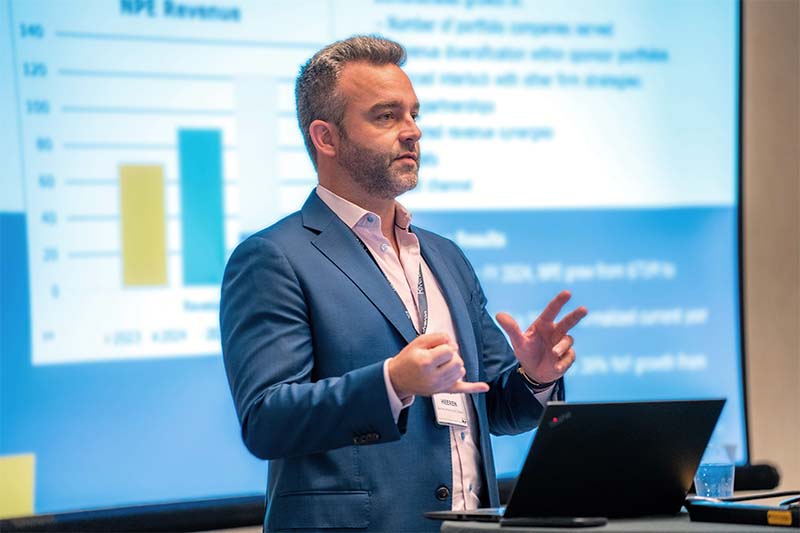
During a recent webinar with AWS and Drata, Riveron’s team discussed how to “Stop Losing Deals Due to SOC 2,” which underscores that SOC 2 compliance is not just an audit exercise. The discussion observed how our team has worked alongside more than 1,000 organizations to successfully elevate their compliance approaches by considering how SOC 2 can support an effective business growth strategy.
If your company wants to pursue SOC 2 efficiently and turn the investment into a growth advantage, knowing it can provide confidence to your prospective enterprise buyers, these four lessons can help you do so:
1. Follow customer demand, not headcount
There is no universal company size at which SOC 2 becomes necessary. A small software company selling to enterprises may need it sooner than a much larger company serving less security-conscious buyers.
In my experience, the decision should be driven by customer expectations and some of the clearest signals come from the market:
- Deals are stalling in security or procurement reviews
- Teams are repeatedly completing lengthy security questionnaires
- Contracts increasingly include security and data-handling requirements
Sales teams should track these requests before they become blockers. While a single request does not always justify compliance, it’s important to consider whether the buyer represents your future ideal customer profile. If similar customers are central to the growth strategy, SOC 2 is likely becoming a commercial necessity rather than just another compliance request. Once organizations recognize that customer demand is driving the need for SOC 2, leaders should ask themselves how to achieve compliance in the most efficient way possible.
For example, my team helped an organization that faced the risk of losing one of its largest customers after learning that future business would depend on achieving SOC 2 Type 2 compliance. By partnering with experienced compliance advisors and auditors, the company streamlined its compliance journey, completed its audit ahead of a critical contract renewal deadline, and retained the customer while strengthening its overall security program. The engagement also established a scalable compliance foundation to support future growth and customer trust. It’s a reminder that SOC 2 is often driven by customer expectations and can quickly become a business necessity rather than just compliance.
2. Rethink your go-to report: When to choose Type 1 vs. Type 2
The first piece of a successful compliance strategy is choosing the right report, and leaders need to ensure that your team understands both the technical and business objectives behind any cybersecurity audit.
When approaching SOC 2 compliance, many organizations assume they should start with a Type 1 report and pursue Type 2 later, but it’s not always the most efficient route. A Type 1 report evaluates control design at a point in time, but Type 2 also evaluates whether those controls operated effectively over a defined period, which is more reassuring for buyers.
In practice, Type 1 may put a report in hand only 30 to 60 days sooner while requiring the cost and effort of two engagements. Rather than assuming Type 1 is the default starting point, organizations with experienced internal leadership or a capable advisory partner may benefit from going directly to Type 2 to avoid duplicated effort and deliver the level of confidence enterprise buyers increasingly expect.
Type 1 can still make sense when a company needs immediate point-in-time assurance or requires more flexibility while building its control environment. The key is to challenge the assumption that Type 1 is always the required first step, and instead, the decision should reflect buyer expectations, timing, internal readiness, and available support.
3. Build partnerships to facilitate your compliance journey
The right advisory, audit, and technology partners can prevent unnecessary controls, unclear expectations, and scope creep. Look for firms that understand your:
- Company size and growth stage
- Industry and customer requirements
- Cloud and technical environment
- Governance, risk, and compliance platform
Engaging an auditor early can clarify evidence requirements before teams invest time in the wrong activities. An audit engagement letter may also reassure prospects while the formal report is underway.
The goal is to build a defensible program that fits the organization today and can mature over time. Organizations that approach compliance collaboratively move faster while creating a stronger experience for customers, auditors, and internal teams. The right strategy combines technology, governance, and operational processes to create a scalable compliance program that supports both digital transformation and business performance.
4. Turn compliance into a competitive advantage
SOC 2 should not become a report that sits unused after the audit. Organizations can feature their security posture in trust centers, sales materials, requests for proposals, and buyer conversations. A report can also reduce dependence on repetitive security questionnaires, helping sales, security, and engineering teams spend less time responding to individual reviews.
Used effectively, SOC 2 can:
- Accelerate procurement and security reviews
- Strengthen credibility with larger buyers
- Differentiate the business from less-prepared competitors
- Support expansion into more demanding markets
- Create a foundation for future privacy and compliance programs
As discussed during the webinar, SOC 2 is most valuable when organizations treat it as a way to build customer trust and support business growth. The effort can add more value more than just meeting a compliance requirement, and organizations that integrate compliance into broader technology transformation initiatives are better positioned to improve operational efficiency while giving buyers greater confidence throughout the sales cycle.
With the right timing, scope, and partners, the right approach to SOC 2 can reduce sales friction, strengthen customer trust, and support the company’s next stage of growth.
Related Reads:
Sign Up for the Newsletter
Lorem ipsum dolor sit amet consectetur. At nullam dignissim et facilisis ipsum volutpat dui.
Contact us
Lorem ipsum dolor sit amet consectetur. At nullam dignissim et facilisis ipsum volutpat dui. Velit eu amet odio dignissim nunc nisl.


More Insights

Hamish de Freitas Recognized as a Notable Leader in Accounting, Consulting & Law by Crain’s New York Business

Rethinking LMEs: Financial Engineering Without Operational Reform Is a Path to Value Destruction

Fraudulent Employees—the Newest Insider Threat? Defending Against State Actors


Contact us
Continue the conversation. Reach out to Riveron’s team of professionals to explore how we can provide the clarity and insight to solve your organization’s most pressing challenges.